Lamiaceae · plant
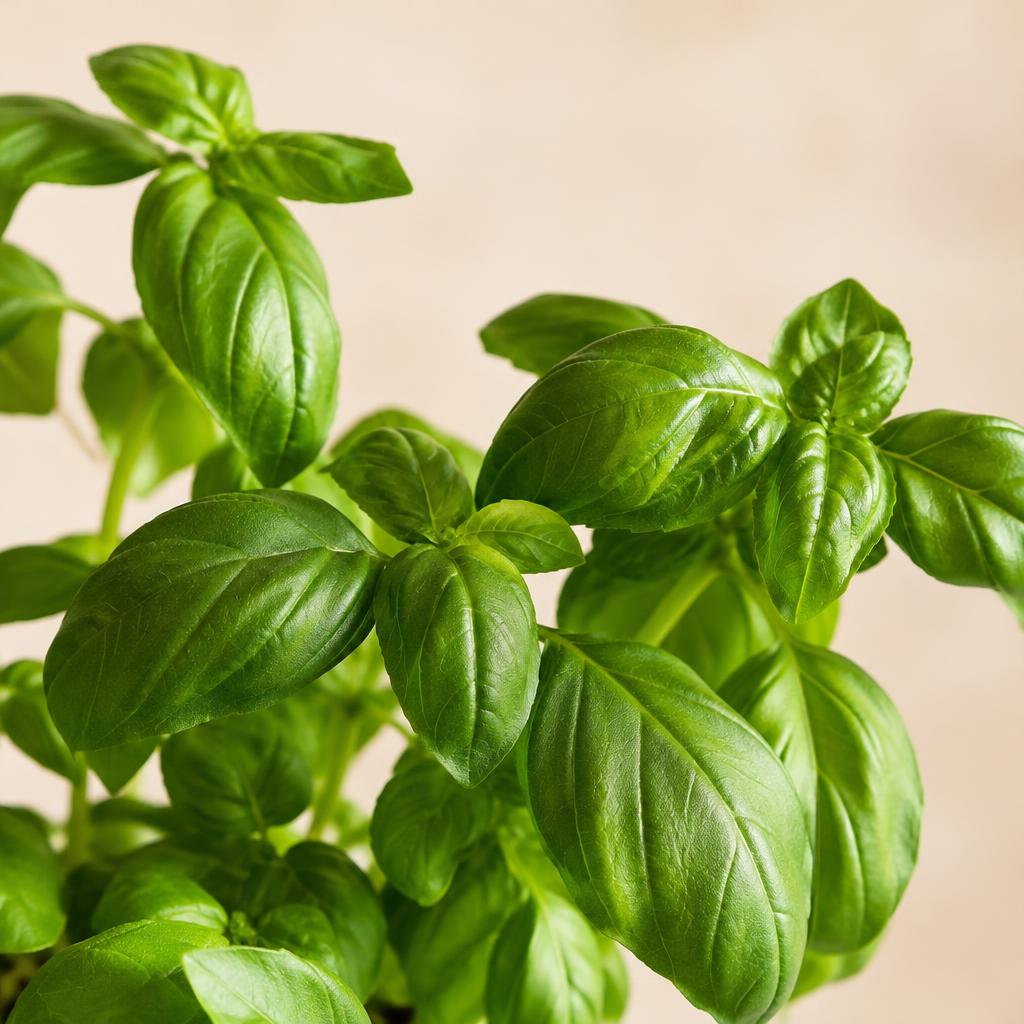
Sweet basil
Ocimum basilicum
Curated from cited sources
An aromatic culinary herb in the mint family, sold fresh and dried in supermarkets.
Detailed Nutrition AnalysisEdibility applies to listed parts only
One edible part does not make the whole plant edible. Parts marked unknown or toxic should not be eaten.Children & pets: Listed as non-toxic to dogs, cats and horses by the ASPCA.
Other parts/states: data unavailable.
Energy per 100 g
23 kcal
96 kJ
Leaves, raw
| Water | 92.06 g |
|---|---|
| Protein | 3.15 g |
| Total fat | 0.64 g |
| Carbohydrate | 2.65 g |
| Dietary fiber | 1.6 g |
| Total sugars | 0.3 g |
| Calcium | 177 mg |
|---|---|
| Iron | 3.17 mg |
| Magnesium | 64 mg |
| Phosphorus | 56 mg |
| Potassium | 295 mg |
| Sodium | 4 mg |
| Zinc | 0.81 mg |
| Copper | 0.385 mg |
| Manganese | 1.148 mg |
| Selenium | 0.3 µg |
| Vitamin C | 18 mg |
|---|---|
| Vitamin A (RAE) | 264 µg |
| Vitamin K (phylloquinone) | 414.8 µg |
| Folate (DFE) | 68 µg |
Source: USDA FDC SR Legacy — “Basil, fresh” — values transcribed for this demo build; verify at FoodData Central. %DV is not shown because reference values differ by country. Nutrient values apply only to this part and state — not to other parts or related species.