Rosaceae · plant
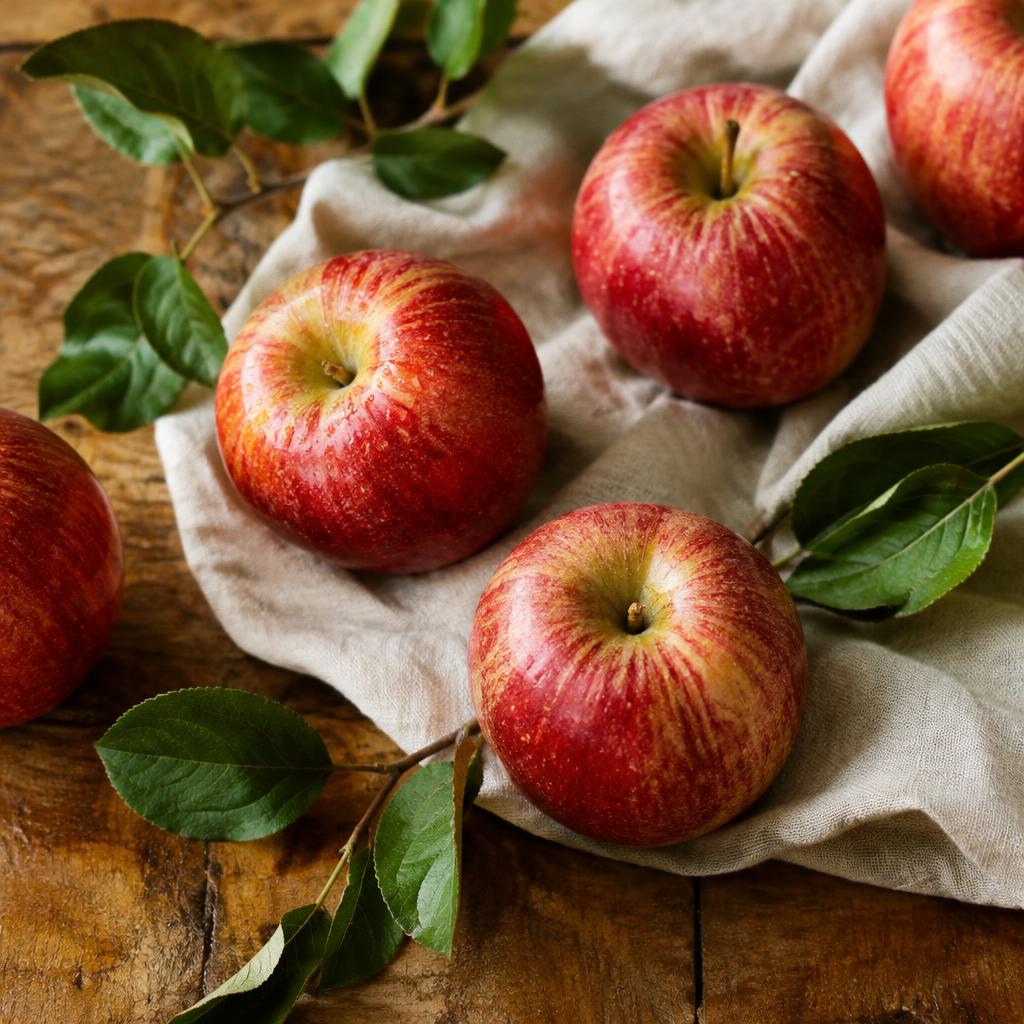
Apple
Malus domestica
Curated from cited sources
A deciduous fruit tree. The fruit flesh and skin are food; the seeds contain amygdalin, a cyanogenic compound.
Detailed Nutrition AnalysisEdibility applies to listed parts only
One edible part does not make the whole plant edible. Parts marked unknown or toxic should not be eaten.Children & pets: ASPCA lists apple stems, leaves and seeds as toxic to dogs, cats and horses. Remove cores before giving fruit to pets.
- Kingdom
- Plantae
- Family
- Rosaceae
- Genus
- Malus
- Native regions
- Central Asia (wild ancestor Malus sieversii).
- Habitat
- Orchards and gardens in temperate climates; in SA mainly the Western Cape.
- Growing conditions
- Cold winters for chill hours, full sun, well-drained soil, cross-pollination for most cultivars.
- Lifecycle
- Long-lived deciduous perennial tree.
- Flowering / fruiting
- Flowers in spring; fruit harvested late summer to autumn (SA roughly Feb–May).
- Uses
- Fresh fruit, juice, baking, sauces, preserves.
- Lookalikes
- Crabapples and other Rosaceae fruits; ornamental fruits can be unpalatable or unsafe.
- Allergies
- Apple can trigger oral allergy syndrome, often in people with birch pollen allergy.