Rosaceae · plant
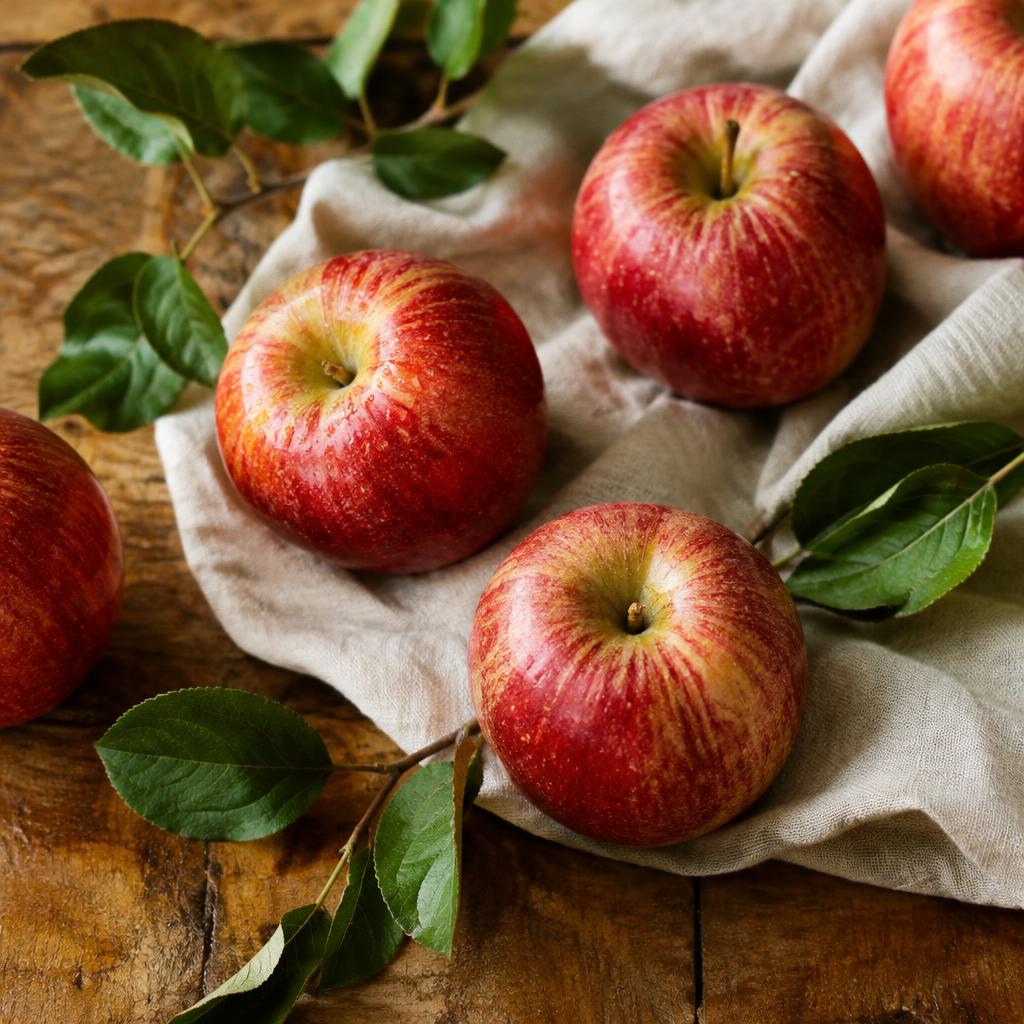
Apple
Malus domestica
Curated from cited sources
A deciduous fruit tree. The fruit flesh and skin are food; the seeds contain amygdalin, a cyanogenic compound.
Detailed Nutrition AnalysisEdibility applies to listed parts only
One edible part does not make the whole plant edible. Parts marked unknown or toxic should not be eaten.Children & pets: ASPCA lists apple stems, leaves and seeds as toxic to dogs, cats and horses. Remove cores before giving fruit to pets.
Other parts/states: data unavailable.
Energy per 100 g
52 kcal
218 kJ
Fruit (flesh & skin), raw
| Water | 85.56 g |
|---|---|
| Protein | 0.26 g |
| Total fat | 0.17 g |
| Carbohydrate | 13.81 g |
| Dietary fiber | 2.4 g |
| Total sugars | 10.39 g |
| Calcium | 6 mg |
|---|---|
| Iron | 0.12 mg |
| Magnesium | 5 mg |
| Phosphorus | 11 mg |
| Potassium | 107 mg |
| Sodium | 1 mg |
| Zinc | 0.04 mg |
| Copper | 0.027 mg |
| Manganese | 0.035 mg |
| Selenium | 0 µg |
| Vitamin C | 4.6 mg |
|---|---|
| Vitamin A (RAE) | 3 µg |
| Vitamin K (phylloquinone) | 2.2 µg |
| Folate (DFE) | 3 µg |
Source: USDA FDC SR Legacy — “Apples, raw, with skin” — values transcribed for this demo build; verify at FoodData Central. %DV is not shown because reference values differ by country. Nutrient values apply only to this part and state — not to other parts or related species.