Solanaceae · plant
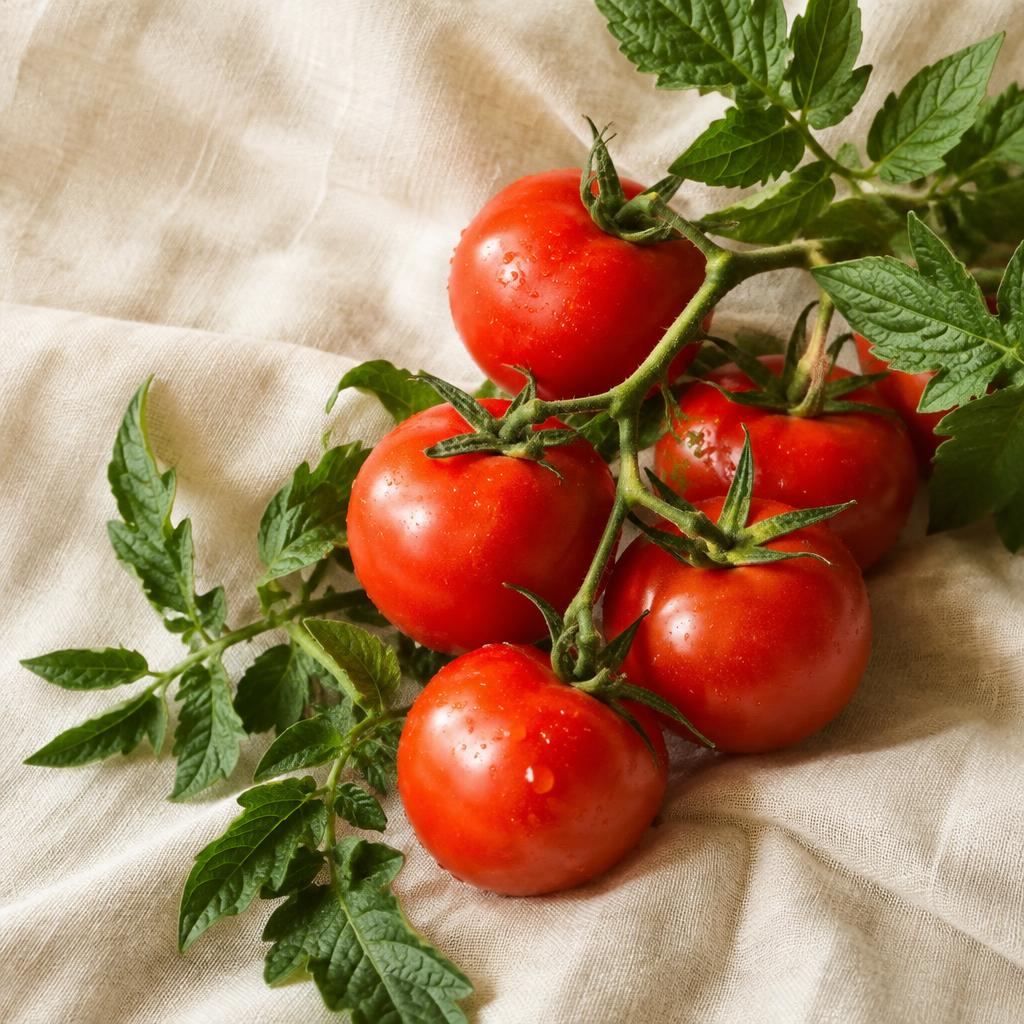
Tomato
Solanum lycopersicum
Curated from cited sources
A widely cultivated nightshade grown for its fruit. Only the ripe fruit is a recognised food; the green parts of the plant are not eaten.
Detailed Nutrition AnalysisEdibility applies to listed parts only
One edible part does not make the whole plant edible. Parts marked unknown or toxic should not be eaten.Children & pets: Leaves and stems are listed as toxic to dogs, cats and horses by the ASPCA. Keep children and pets from chewing plants.
- Kingdom
- Plantae
- Family
- Solanaceae
- Genus
- Solanum
- Native regions
- Western South America (Andean region); domesticated in Mesoamerica.
- Habitat
- Cultivated worldwide in gardens, farms and greenhouses; occasionally escapes cultivation.
- Growing conditions
- Full sun, warm temperatures, well-drained fertile soil, regular watering. Frost-tender.
- Lifecycle
- Grown as an annual; perennial in frost-free climates.
- Flowering / fruiting
- Flowers and fruits in the warm season (Southern Hemisphere roughly Nov–Apr outdoors).
- Uses
- Fresh fruit, sauces, soups, preserves, salads.
- Lookalikes
- Other Solanum species (e.g. nightshades with small berries) — some are toxic. Never eat wild ‘tomato-like’ berries.
- Allergies
- Some people react to tomato (oral allergy symptoms, contact dermatitis from plant hairs).