
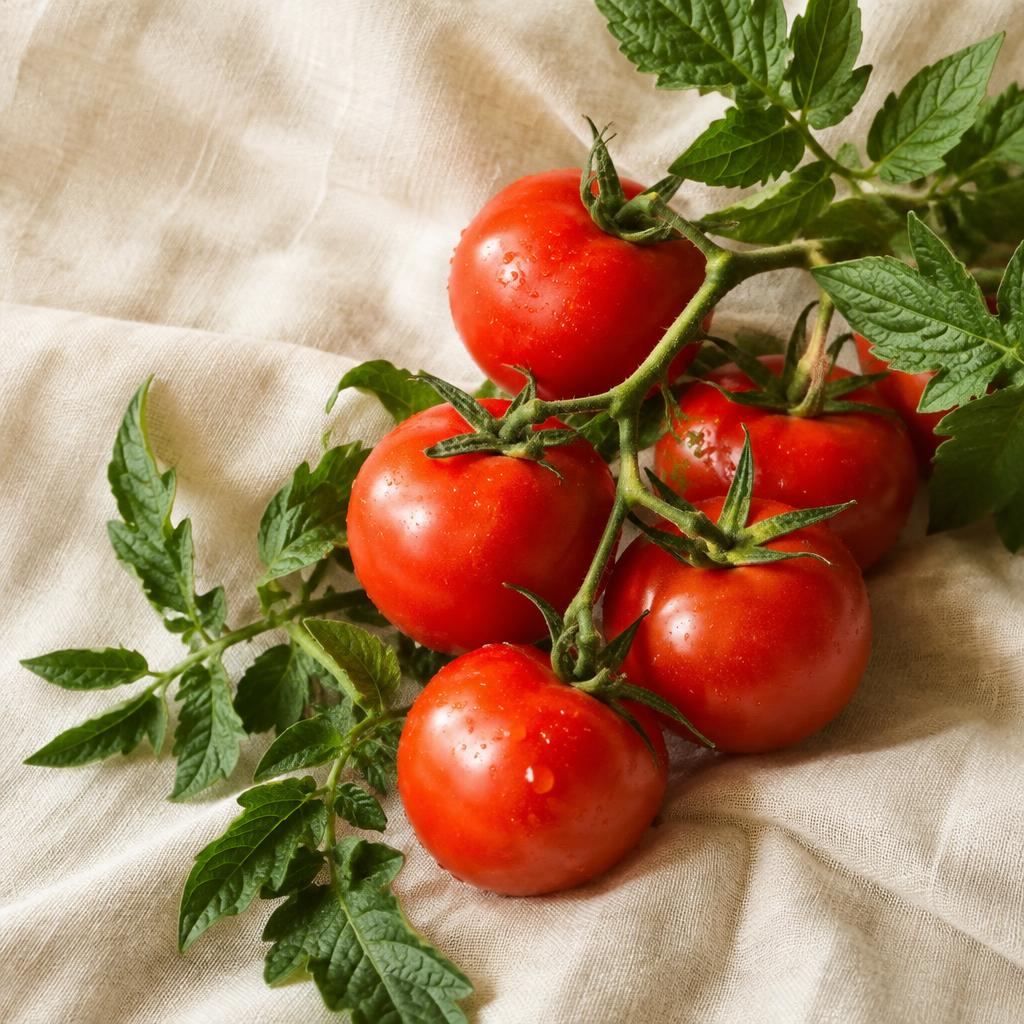
Solanaceae · plant
Tomato
Solanum lycopersicum
Curated from cited sources
A widely cultivated nightshade grown for its fruit. Only the ripe fruit is a recognised food; the green parts of the plant are not eaten.
Detailed Nutrition AnalysisEdibility applies to listed parts only
One edible part does not make the whole plant edible. Parts marked unknown or toxic should not be eaten.Children & pets: Leaves and stems are listed as toxic to dogs, cats and horses by the ASPCA. Keep children and pets from chewing plants.
Other parts/states: data unavailable.
Energy per 100 g
18 kcal
75 kJ
Fruit (ripe), raw
| Water | 94.52 g |
|---|---|
| Protein | 0.88 g |
| Total fat | 0.2 g |
| Carbohydrate | 3.89 g |
| Dietary fiber | 1.2 g |
| Total sugars | 2.63 g |
| Calcium | 10 mg |
|---|---|
| Iron | 0.27 mg |
| Magnesium | 11 mg |
| Phosphorus | 24 mg |
| Potassium | 237 mg |
| Sodium | 5 mg |
| Zinc | 0.17 mg |
| Copper | 0.059 mg |
| Manganese | 0.114 mg |
| Selenium | 0 µg |
| Vitamin C | 13.7 mg |
|---|---|
| Vitamin A (RAE) | 42 µg |
| Vitamin K (phylloquinone) | 7.9 µg |
| Folate (DFE) | 15 µg |
Source: USDA FDC SR Legacy — “Tomatoes, red, ripe, raw, year round average” — values transcribed for this demo build; verify at FoodData Central. %DV is not shown because reference values differ by country. Nutrient values apply only to this part and state — not to other parts or related species.